
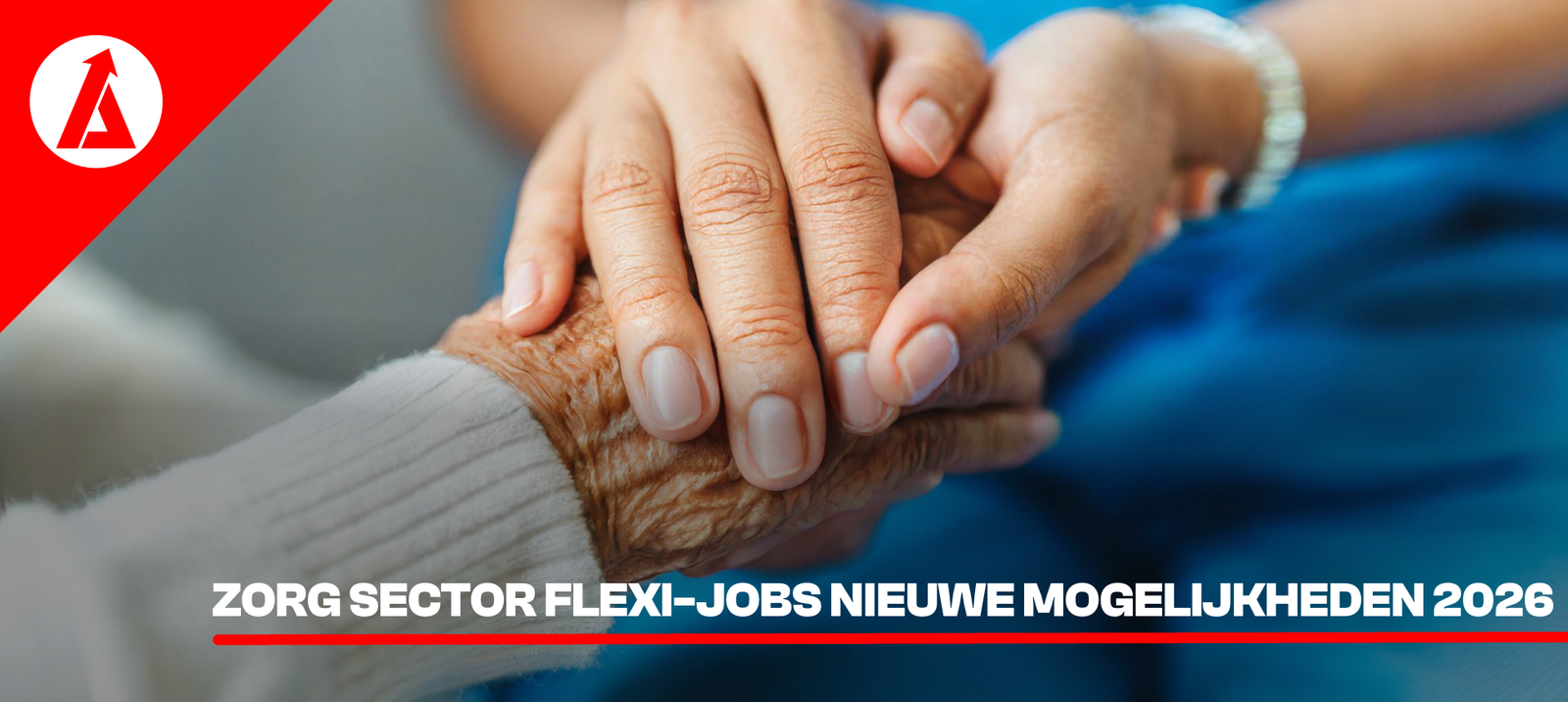
Healthcare sector flexi-jobs: new opportunities in 2026
Update 15 October 2026: this article has been checked against the 2026 figures. Student workers may work 650 hours a year at a 2.71 percent contribution, and since May 2026 light work is allowed from age 15. Flexi-jobbers earn tax-free up to 18,440 euros a year; the minimum flexi hourly wage in hospitality has been 12.11 euros since 1 September 2026 (13.04 euros including holiday pay) and the maximum is 21.00 euros (22.61 euros including holiday pay). Since 1 July 2026 flexi-jobs are possible in almost all sectors. The full 2026 rules are in our guide on the flexi-job hourly wage, rules and ceiling: anyshift.be
In this article
- The staff shortage in healthcare: the figures
- Why is there such a big staff shortage?
- Flexi-jobs in healthcare: what was already possible?
- What has changed since 1 July 2026?
- Who is eligible for a flexi-job?
- Benefits of working in healthcare through flexi-jobs
- How do you find a flexi-job in healthcare?
- For care organisations: find staff quickly
- Practical tips for a successful start
- Frequently asked questions
- Quiz
The Flemish healthcare sector is under pressure. Hospitals are closing beds, residential care centres are imposing admission freezes, and home care services cannot keep up with demand. The staff shortage is no longer a future problem, it is reality. At the same time, an important change has applied since 1 July 2026: flexi-jobs are now also possible for care-providing roles. For anyone who wants to work or earn extra in healthcare, new opportunities are opening up.
In this article you will read everything about flexi-jobs in the healthcare sector: what was already possible, what changed in 2026, and how can you get started yourself? We also offer practical information for care organisations looking for staff.
The staff shortage in healthcare: the figures
The situation in Flemish healthcare is worrying. According to Zorgnet-Icuro, 82% of hospitals indicate that they have to scale back activities or will do so in the near future. More than 8 in 10 hospitals are closing beds because they cannot find enough staff. Departments for geriatrics, rehabilitation, intensive care and surgery are particularly struggling.
In residential care centres it is no different. Seven percent of residential care centres have already introduced a temporary admission freeze and can no longer take in new residents. A quarter are considering doing the same in the coming months. Half of the residential care centres do not meet the staffing standards, and 15% can no longer even reach the legal standard with their current staff.
The workload in home care is increasing too. According to research, the demand for care staff will rise by 170% over the next 45 years in residential care centres and by 90% in home care. Within 20 years there is a risk of losing up to a quarter of the current care capacity if no solution is found.
Why is there such a big staff shortage?
The shortage of care staff has several causes. An ageing population plays a major role: more and more elderly people need care, while too few new care providers are joining. In addition, a lot of staff leave the sector because of the high workload, changing shifts and emotionally demanding tasks. Covid intensified the problem: many care workers are exhausted and opt for other work.
The labour market is tight as well. Young people more often choose other sectors, and combining study and work in healthcare is not always easy. Moreover, many care organisations face budget constraints, which means they cannot always offer competitive wages.
Flexi-jobs in healthcare: what was already possible?
Since the start of 2023, care organisations have been able to use flexi-jobs. This offers opportunities for people who already have a permanent job and want to earn extra in healthcare. But there are limitations. Until 1 July 2026, flexi-jobs were only allowed for non-care-providing roles.
Which roles are possible now?
As a flexi-jobber you can get started in supporting tasks such as:
- Cleaning and facility: cleaning rooms, maintaining sanitary facilities, taking care of linen
- Logistics: managing stock, distributing meals, moving materials
- Garden maintenance and minor repairs: maintaining green spaces, solving technical problems
- Administrative support: file management, switchboard, processing mail
- Reception and front desk: guiding visitors, providing information, managing appointments
These roles are essential for care organisations to function properly. They relieve the care staff and ensure that nurses and care workers can focus on the direct care of patients and residents.
What has changed since 1 July 2026?
The rules for flexi-jobs have been expanded. Since 1 July 2026, flexi-jobs have been possible in almost all sectors, including for care-providing roles. This means that nurses, care workers and other care professionals can also earn extra through a flexi-job, provided they hold the required diplomas or recognition. The joint committees for healthcare (PC 330, 331 and 332) can, however, set a maximum percentage of the work volume for flexi-jobs.
New opportunities for care providers
Since 1 July 2026, as a nurse, care worker or care assistant you can also do flexi-jobs. This opens up opportunities for:
- Nurses who want to work extra in a hospital, residential care centre or home care
- Care workers who want to take on extra shifts alongside their main job
- Care assistants who want to step in flexibly during peak periods
This change comes at a crucial moment. With the major staff shortage and the increasing demand for care, flexi-jobs offer a practical solution. They make it possible to deploy flexible staff without long contracts, and they give care providers the chance to earn extra on their own terms.
Increase of the tax-free ceiling
In addition to the expansion to care-providing roles, the tax ceiling has also gone up. Whereas up to and including 2024 you could earn a maximum of 12,000 euros per year tax-free through flexi-jobs, that became 18,000 euros for 2025 and, indexed, 18,440 euros for the whole of 2026. That is a substantial increase and makes earning extra in healthcare even more attractive.
Outside hospitality, the flexi wage may be at most 150% of the pay scale for the role. This keeps a flexi-job possible even for better-paid roles such as nurses.
Who is eligible for a flexi-job in healthcare?
To get started as a flexi-jobber, you have to meet certain conditions:
- You worked at least 4/5ths for one or more other employers in quarter T-3 (the third quarter before your flexi-job)
- You are retired (with or without a 45-year working career)
Please note: If you do not yet have a main occupation or work less than 4/5ths, you are not eligible for a flexi-job. In that case you can apply for a regular contract or a student job (if you are a student).
Do you have a permanent job in another sector and want to earn extra in healthcare? Then a flexi-job is an interesting option. You work when it suits you, earn up to 18,440 euros tax-free per year, and pay no social contributions on your flexi income.
Benefits of working in healthcare through flexi-jobs
Working in healthcare through a flexi-job has benefits for everyone:
For employees:
- Flexibility: you decide for yourself when you are available
- Tax advantage: up to 18,440 euros per year tax-free
- Meaningful work: you contribute to the care of vulnerable people
- Work experience: you gain experience in the healthcare sector
- Building a network: you get to know colleagues and organisations
For care organisations:
- Staff quickly: you find flexible workers who can step in
- Lower costs: reduced social charges on flexi-jobs
- Flexible planning: you deploy people when it is busy
- Less administration: simpler than regular contracts
How do you find a flexi-job in healthcare?
You want to get started in healthcare, but how do you find a suitable flexi-job quickly? Here are a few practical tips:
1. Use a flexible job app
Platforms such as AnyShift bring supply and demand together quickly. You see straight away which care organisations are looking for staff, where the jobs are, and how much you earn. Applying takes just a few clicks and you often get a quick reply.
Discover more about flexible working through AnyShift.
2. Think broadly: supporting roles are valuable too
Even if you have no healthcare background, you can already get started in healthcare now. Think of cleaning, logistics, reception or administration. These jobs are essential and ensure that the care staff can focus on the patients.
View all flexi-job and student job locations in healthcare near you.
3. Be flexible in your availability
Care organisations mainly need people who can work at irregular times: evenings, weekends, and during holidays. The more flexible you are, the more opportunities you have.
4. Ask about growth opportunities
A flexi-job can be a stepping stone to more. Perhaps you discover that healthcare is something for you and you want to work full-time in the sector later. Many care organisations are looking for permanent employees and give flexi-jobbers priority.
For care organisations: find staff quickly
Are you an employer in healthcare and short-handed? Flexi-jobs can offer a solution. Through platforms such as AnyShift you quickly find motivated people who want to earn extra in healthcare.
You post a vacancy, set your conditions (availability, role, location), and candidates apply directly through the app. This way you fill your schedule quickly, without lengthy recruitment procedures.
Want to know more? Check out the page For companies: finding staff through AnyShift.
Practical tips for a successful start in healthcare
You have found a flexi-job in healthcare. How do you make sure you make a good impression?
Come well prepared
Ask in advance what is expected of you. What clothing should you wear? Which documents should you bring? Where should you report? Good preparation prevents confusion.
Be reliable
In healthcare, reliability is crucial. Arrive on time, keep your commitments, and let people know in good time if you are unable to come. Care organisations value people they can trust.
Show respect and empathy
You work with vulnerable people: the elderly, the sick, people with a disability. Show respect, listen carefully, and be patient. A friendly attitude makes the difference.
Ask when you do not know something
It is better to ask than to make a mistake. Colleagues and managers understand that you need time to settle in. Feel free to ask questions if something is unclear.
Frequently asked questions about flexi-jobs in healthcare
Can I do a flexi-job in healthcare as a nurse?
Yes. Since 1 July 2026, flexi-jobs have also been allowed in care-providing roles, provided you hold the required diploma or recognition.
How much do I earn with a flexi-job in healthcare?
That depends on your role and employer. Supporting roles such as cleaning and logistics often earn around 14-16 euros per hour. For care-providing roles the pay is higher, often between 18-21 euros per hour.
Do I pay tax on my flexi income?
No, up to 18,440 euros per year your flexi income is tax-free. You also pay no social contributions.
Can I do a flexi-job as a student?
No, flexi-jobs are only for people who work at least 4/5ths for another employer, or for the retired. As a student you can apply for a student job in healthcare.
Do I need a diploma to work in healthcare?
For supporting roles you often do not need a specific diploma. For care-providing roles such as nurse or care worker, a recognised diploma is compulsory.
More questions? Check the Frequently asked questions on AnyShift.
Make 2026 your leap into healthcare
The healthcare sector needs you. With the staff shortage and the expansion of flexi-jobs to care-providing roles, since July 2026 there have been more opportunities than ever to earn extra flexibly in healthcare. Whether you do cleaning, handle logistics, or work extra shifts as a nurse: every contribution counts.
Flexi-jobs offer a win-win: care organisations find staff quickly, and you earn extra tax-free with flexible hours. On top of that, you do meaningful work and contribute to the care of vulnerable people in Flanders.
So do not wait too long. The best jobs are filled quickly. Look for opportunities in your region today and take the step towards flexible working in healthcare.
Related articles
Marie flexi-jobber: how to earn extra with a flexi-job
A flexi-jobber like Marie earns extra by doing flexi-shifts alongside a main job. You will read who can do this, what st...
Read article
Can a Student Worker Do Overtime? What You Need to Know
A student worker can work extra hours, as long as you and your employer agree on it and you have a student agreement. Af...
Read article
In which sectors can you work as a student?
As a student worker, you can work in hospitality, events, retail, administration, logistics, cleaning, transport and bea...
Read articleReady to get started?
Find work or staff via AnyShift. Register for free, sorted fast.
THE APP
Cookie preferences
Choose which cookies you allow. You can change your choice at any time.
Required to make the website work (session, security, your cookie choice). These cannot be switched off.
Help us understand how visitors use the site so we can improve it. Anonymised where possible.
Used to show relevant ads and measure campaign reach.