
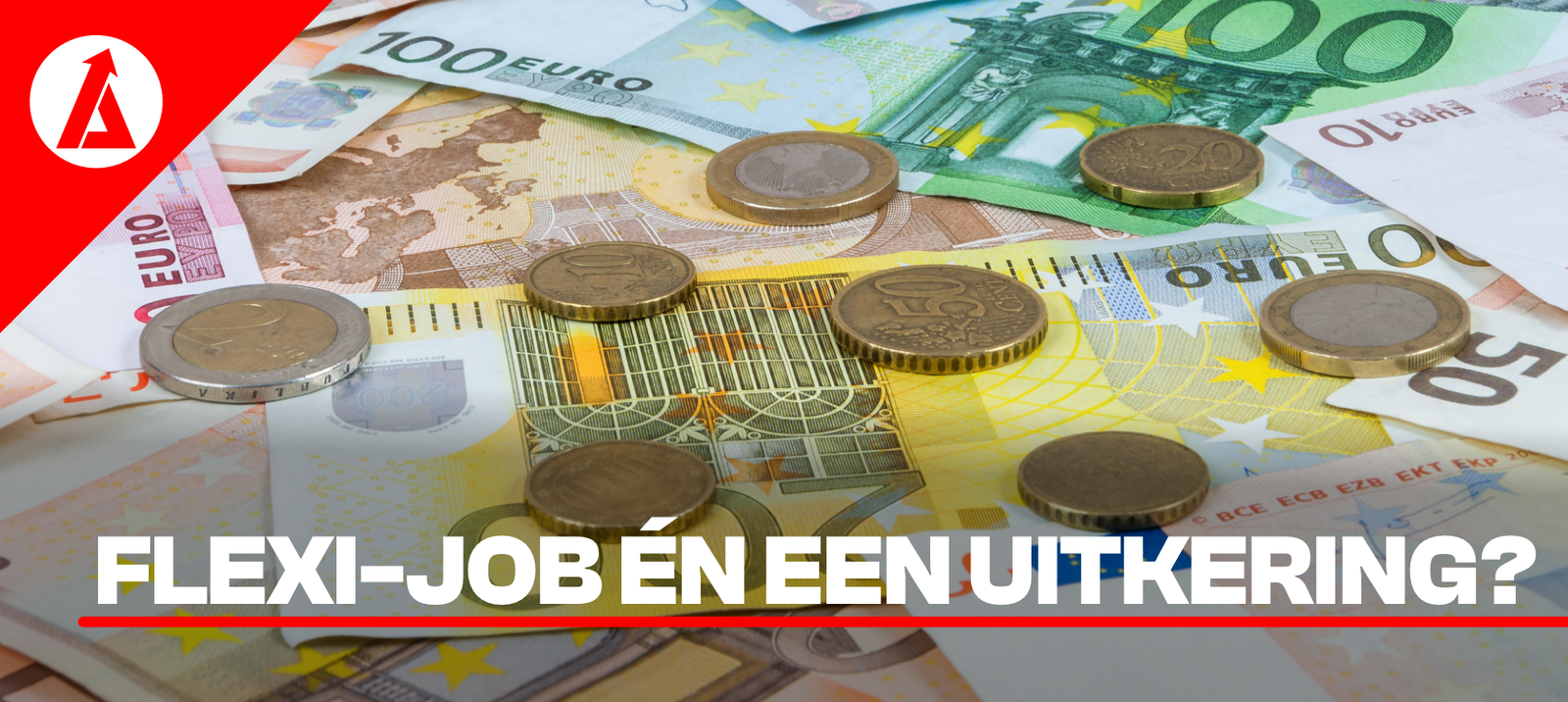
A flexi-job and a benefit? CD&V wants to close the loophole in 2026
Update 15 October 2026: this article has been checked against the 2026 figures. Student workers may work 650 hours a year at a 2.71 percent contribution, and since May 2026 light work is allowed from age 15. Flexi-jobbers earn tax-free up to 18,440 euros a year; the minimum flexi hourly wage in hospitality has been 12.11 euros since 1 September 2026 (13.04 euros including holiday pay) and the maximum is 21.00 euros (22.61 euros including holiday pay). Since 1 July 2026 flexi-jobs are possible in almost all sectors. The full 2026 rules are in our guide on the flexi-job hourly wage, rules and ceiling: anyshift.be
More than 8,000 Belgians currently combine a benefit with a flexi-job. They are officially unemployed, sick, on time credit or on parental leave, and yet they spend one or two days a week behind the bar of a café, in a retailer's warehouse or at the local bakery around the corner. Today this is perfectly legal, but if MP Nathalie Muylle (CD&V) has her way, that will change in 2026.
The timing is no coincidence. From 1 July 2026, the flexi-job system will be extended to all sectors of the Belgian labour market. Anyone sitting at home on a benefit today will soon be able to earn extra, tax-free, in almost any company. For anyone who supports the sustainable reactivation of the long-term sick, that is a problem.
In this blog, we explain exactly what is going wrong with the current rules, which bill CD&V is putting on the table, and what that means for you as a flexi-jobber, long-term sick employee or employer in 2026.
The figures: who combines a benefit with a flexi-job today?
Research published in early 2026 revealed that more than 8,000 of our compatriots currently combine a flexi-job with a social benefit. These are people who are unemployed, on parental leave or time credit, or staying at home long-term sick. The practice is completely legal, but the figures are growing year after year.
The most sensitive part concerns the long-term sick. According to the same figures, there are currently more than 240 long-term sick people who top up their sickness benefit with flexi-work. Out of a population of 576,000 long-term sick people in Belgium, that may seem like very little, but it is a group that could grow quickly once the system is opened up in July 2026.
Belgians currently combine a benefit with a flexi-job
Why is this so attractive from a tax perspective?
You pay no personal income tax and no ordinary social security contributions on what you earn with a flexi-job. Combine that with a benefit and you quickly end up with a net income that comes close to that of a full-time job. Professor of socio-economic policy Ive Marx (UAntwerpen) speaks of a genuine inactivity trap: why would a long-term sick person go back to work full-time when he or she can do tax-free flexi-work while keeping the full benefit?
It is exactly that financial logic that Muylle's bill aims to puncture.
What does the law say today?
Not every benefit recipient can simply take on a flexi-job. The conditions differ depending on the type of benefit. Let's run through them, because the difference between the unemployed and the long-term sick in particular stands out.
| Type of benefit | Condition for flexi-work |
|---|---|
| Unemployed | Worked at least 4 days a week in the 9 months before unemployment |
| Parental leave or time credit | At least 12 months of flexi-job contract before the start of the leave |
| Long-term sick (today) | At least 4 days of sickness benefit per week + approval from the advising physician |
| Long-term sick (after the bill) | Only continuation of an existing contract, no new starts |
What stands out: for those who are unemployed, taking parental leave or on time credit, prior employment conditions apply. Not for the long-term sick. Today, they can simply get started without ever having had a flexi-job before, as soon as a doctor gives the green light. That, according to CD&V, is where the shoe pinches.
The 80/20 situation as a textbook example
Muylle herself cites a telling example: an employee who has been declared 80% sick can do flexi-work for the remaining 20%. The result: 100% of the sickness benefit is retained, plus a tax-free income from the flexi-job. According to the MP, that does not sit right: "Why would you ever go back to work full-time?"
The Muylle bill: what changes?
The bill on the table in May 2026 is remarkably nuanced. It does not abolish flexi-jobs for the long-term sick entirely, but makes a clear distinction between those who were already active and those who only start flexi-working during their illness.
What remains possible?
- Anyone who already had a flexi-job before falling ill may continue to do so.
- However, the number of hours may not be increased during the period of illness.
- The advising physician continues to decide whether working is medically justified.
What will be prohibited?
- Starting new flexi-jobs during a period of illness becomes impossible.
- Anyone who was never active as a flexi-jobber before falling ill cannot start one either.
The system for the long-term sick is thus brought into line with the rules that already apply to those on care leave or time credit. No encouragement to set up a new tax-free side income from a position of illness, but room to continue existing commitments.
Why timing is everything: the expansion on 1 July 2026
The bill does not come out of nowhere. On 1 July 2026, flexi-jobs will be rolled out to all sectors of the Belgian labour market. That means the pool of possible flexi positions will expand enormously, from healthcare and hospitality to virtually every private and public sector. A long-term sick bus driver could suddenly do flexi-work as a bus driver for another company. An IT worker on sick leave could pick up extra work at another software house.
"I fear that all the brakes will come off and many more long-term sick people will start flexi-working if we do not adjust the system."
According to the federal government, reducing the number of long-term sick is one of the main objectives. With around 576,000 people staying at home long-term, there is an enormous labour market reserve. At the same time, Flanders still counts around 174,000 open vacancies today. So the question is not whether there is enough work, but whether the system genuinely encourages people to get back to work.
"It stings when a sick colleague picks up work at the bakery"
In small SMEs, the current rules sometimes lead to bitter situations. Imagine: a colleague has been at home sick for months. On the work floor, it is all hands on deck to absorb the extra work. And then you see that same colleague selling bread at the local bakery on Sunday. That is exactly the kind of scene CD&V wants to avoid. Not by scrapping flexi-jobs, but by closing the loophole for those who only sign up during their illness.
What does Minister of Work David Clarinval say?
Minister of Work David Clarinval (MR) is not shooting down the CD&V proposal, but first wants to let the general expansion of July 2026 do its work. His approach: expand first, evaluate at the end of 2026, then intervene if necessary. Whether the bill will actually make it through in the current legislature therefore depends on that evaluation. Muylle herself is hopeful, because the proposal fits within the broader objective of getting the long-term sick back to work.
If you want to follow the evolution of the legislation closely, visit our frequently asked questions page or the overview page with all our blogs.
What does this mean for you as a flexi-jobber?
Are you currently combining a flexi-job with a benefit, or considering it? Then these are the practical consequences to keep an eye on in 2026:
- Unemployed: the rules do not change with this proposal. The condition of four days of work in the nine months before unemployment continues to apply.
- Parental leave and time credit: nothing changes here either. The legal requirement of twelve months of prior flexi-job remains in force.
- Long-term sick with an existing contract: you may continue working, but your hours may not increase.
- Long-term sick without a track record: if the proposal becomes law, you will no longer be able to take on a new flexi-job during your period of illness.
If you are fit and available and wondering whether a flexi-job is something for you: check which positions are open in your region via flexi-job and student job locations. Many sectors are crying out for extra hands, and with the July expansion the offer will only grow.
What does this mean for employers?
For employers, nothing changes administratively for the time being, but the signal is clear: the government wants to prevent flexi-jobs from becoming a brake on sustainable reactivation. Employers who want to bring a long-term sick employee back on board would do well to focus on progressive return to work within their own company, instead of waiting until someone goes flexi-working for the business next door.
"A flexi-job is only fleeting and temporary. It is better to let people restart one or two days a week with their own employer, or to look together for a new sustainable job."
Employers who do want to use the flexi-job system for other target groups, such as students, pensioners and full-time employees with a second job, can submit a request via our companies page. Especially with the sector expansion of 1 July 2026 in sight, it pays to review your own work schedules now.
Conclusion: a correction, not an abolition
Nathalie Muylle's bill is not an attack on the flexi-job system. It is an attempt to curb one specific combination, a sickness benefit plus a new flexi-job, in a more targeted way. The underlying idea is clear: those who are sick should be focused on recovery and reactivation, not on a tax-free second income that makes the step back to full-time work financially unattractive.
Whether the proposal goes ahead depends on the evaluation at the end of 2026. Until then, the current rules remain in force, with the major expansion on 1 July as the tipping point. For anyone who wants to work correctly within the rules, today and tomorrow, one piece of advice applies above all: stay informed. The legislation around flexi-jobs is evolving so quickly in 2026 that what was still correct in January may already be outdated by July.
Do you want to earn a flexible extra income within the rules, or are you an employer looking for extra hands for your shifts? Sign up as a shifter or browse the current student jobs in your area.
Download the free AnyShift app and discover the available flexi-jobs and student jobs in your area.

Stay up to date with all flexi-job changes in 2026!
Related articles
Tax slip and individual account: what are they?
What are a tax slip and an individual account, and why do they matter as a flexi-jobber? You will read what they contain...
Read article
Marie flexi-jobber: how to earn extra with a flexi-job
A flexi-jobber like Marie earns extra by doing flexi-shifts alongside a main job. You will read who can do this, what st...
Read article
Can a Student Worker Do Overtime? What You Need to Know
A student worker can work extra hours, as long as you and your employer agree on it and you have a student agreement. Af...
Read articleReady to get started?
Find work or staff via AnyShift. Register for free, sorted fast.
THE APP
Cookie preferences
Choose which cookies you allow. You can change your choice at any time.
Required to make the website work (session, security, your cookie choice). These cannot be switched off.
Help us understand how visitors use the site so we can improve it. Anonymised where possible.
Used to show relevant ads and measure campaign reach.