Tax slip and individual account: what are they?
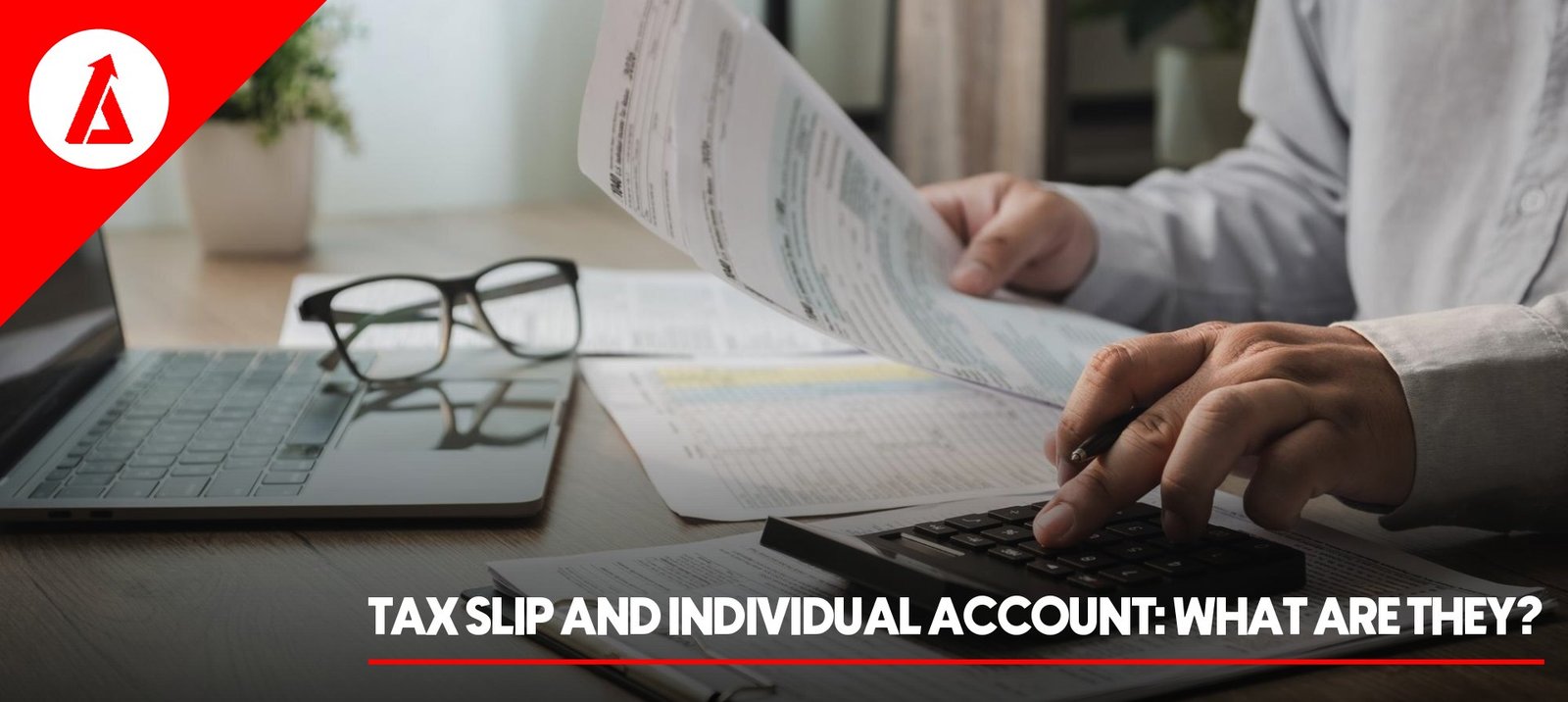
The tax slip (fiscale fiche) is the document in which your employer summarises your taxable income for a year, so that you can check it when filing your tax return. The individual account (individuele rekening) is the detailed overview of your pay and deductions per period, kept by your employer. As a flexi-jobber, you use the tax slip to review your income and the individual account to check that your payments are correct.
If you have a main job or a pension and do flexi-jobs on the side, you will receive separate documents from each employer. Below you can read what they contain, what the ceiling for flexi income means and what to watch out for.
Tax slip and individual account: what is the difference?
Both documents are about your pay, but they serve a different purpose.
- Tax slip: a summary per income year. It is intended for your tax return and for the tax authorities.
- Individual account: an overview of what was paid to you over the periods and what was deducted. It is a detailed list, not an annual overview for the tax authorities.
You can remember it like this: the tax slip gives the end result, the individual account shows how you got there. If you have several employers, for example a main job and one or more flexi-jobs, you will also have several tax slips.
What is on a tax slip?
On a tax slip you will find the information you need to fill in your income correctly. Specifically, this includes:
- your identity and that of your employer;
- the income year the slip relates to;
- your taxable remuneration for that year;
- any benefits you received;
- the withholding tax that was already deducted, if withholding tax was paid.
For each slip, check that your name, national register number and the income year are correct. A mistake in your details is easily made and easy to have corrected, as long as you notice it in time.
What is the individual account?
The individual account is the overview of your payments. Your employer keeps track, for each employee, of what was paid out and what was deducted. For you, it is mainly a control tool. You compare it with your payslips and your bank statements, and you can see right away whether every period you worked was paid.
If you worked for the same employer at different times, you will find everything in one place. That is handy if you no longer remember whether a certain shift has already been paid. Request the individual account from your employer or, if they have one, from the social secretariat. Not every employer hands it over automatically, so just ask for it.
Tax slip for a flexi-job: what is the ceiling?
For flexi-jobbers, the tax slip is of extra interest because of the tax ceiling. Your flexi income is tax-free up to 18,440 euros per year (income year 2026). As long as your flexi income stays below that ceiling, no withholding tax has to be paid on the flexi wage. If you earn more than the ceiling in a year, everything above that limit is taxed.
That ceiling applies to your flexi income, not to the pay from your main job. Your tax slip from a flexi employer shows how much you earned with that employer. If you work for several employers in flexi-jobs, add up the slips to see where you stand. Do this in good time, and not only when filling in your tax return.
On the page about flexi-jobs you can read how the system works.
Tax slip and individual account as a pensioner
Are you retired and working as a flexi-jobber on the side? Then there is an important difference: the ceiling of 18,440 euros does not apply to pensioners. So as a pensioner, you do not work with the same ceiling as someone with a main job.
What that means for your tax return depends on your personal situation and your other income. Check this with the FPS Finance (FOD Financiën). Your tax slip and your individual account remain your starting point: they show what you earned and what was deducted. Keep them together with your pension statement.
Is something wrong on your slip or account?
Always check your documents with a short checklist:
- Is every period in which you worked on the individual account?
- Do the amounts paid match your bank statements?
- Does the total of the tax slip match what you kept track of yourself?
- Are your personal details correct on all documents?
If you see a difference, first contact your employer. Usually it is an administrative mistake that is quickly corrected. Questions about withholding tax and taxes go to the FPS Finance. Questions about your framework agreement, your flexi agreement or your pay go to the FPS Employment, Labour and Social Dialogue.
For flexi-jobs, your employer passes on the pay data via the online service Flexi at work. That data ends up in the flexi wage counter on mycareer.be. This way, it can be tracked how much flexi wage has been paid out. If your employer makes a mistake, it must therefore also be corrected there.
Practical: contract, Dimona and your documents
Good administration starts at the beginning of your flexi-job. It is best to arrange this in advance:
- Main job requirement: to be allowed to do a flexi-job, you must have worked at least 4/5 of a full-time job with one or more other employers in the reference quarter (T-3). Pensioners can also do flexi-jobs.
- Framework agreement and flexi agreement: you work with a framework agreement and, within it, an agreement per flexi-job. Keep your copies, because you need them to check your slip and account.
- Dimona: your employer makes the Dimona declaration for your employment. Feel free to check whether it has been done.
- Sector: since 1 July 2026, flexi-jobs are allowed in all sectors, except in domestic work, the funeral sector, agriculture, horticulture and sea fishing.
Are you a student? Then you are looking for a student job, because a flexi-job is not intended for student workers. For a flexi-job you need a main job of at least 4/5 or a pension. For a student job, too, you receive documents to keep.
Want to know where you can go for flexi-jobs and student jobs? On the page with locations for flexi-jobs and student jobs you will find an overview.
Five tips to keep your slip and account under control
- Keep everything in one place. Create a folder, digital or on paper, with your payslips, contracts, tax slips and individual accounts per income year.
- Keep track of your shifts yourself. Note when and for how long you worked. That way you can quickly compare the individual account with your own overview.
- Add up your flexi income. If you have several flexi employers, add up their slips to keep an eye on the ceiling of 18,440 euros (unless you are retired).
- Just request the individual account. You do not have to wait until there is a problem. A short email to your employer or social secretariat is enough.
- Report mistakes immediately. The sooner you report a difference, the easier it is to correct. If it concerns taxes, contact the FPS Finance.
Frequently asked questions about the tax slip and individual account
What is a tax slip?
A tax slip is the annual overview that your employer draws up of your taxable income. You use it with your tax return to check that the amounts are correct.
What is an individual account?
It is the overview of your pay and deductions per period, kept by your employer. You can use it to verify that every period you worked was paid correctly.
Do I get a slip per employer?
Yes, each employer draws up its own documents. If you have a main job and one or more flexi-jobs, you will therefore have several slips and you need to look at all of them.
Up to how much is flexi income tax-free?
Flexi income is tax-free up to 18,440 euros per year (income year 2026). That ceiling does not apply to pensioners. What happens above the ceiling is that the excess is taxed.
Can I do a flexi-job as a student?
No. For a flexi-job you need a main job of at least 4/5 or a pension. As a student, look at a student job.
In summary
The tax slip is your annual overview for taxes, and the individual account is your detailed overview of what was paid. Check both, add up your flexi income and keep an eye on the ceiling of 18,440 euros if you are not retired. If in doubt, ask your employer for an explanation or contact the competent authority.
- You can find more about working with an extra job on the page about flexi-jobs.
- Looking for a student job? Then take a look at the student jobs.
- Want to see where you can work? Check the locations for flexi-jobs and student jobs.
- Want to get started yourself? Then discover what it means to be one of our shifters.
- Are you an employer looking for extra staff? Read more for businesses.
- You can find more explanations on our blogs.